Coconut Crusted Salmon Delight
Coconut Crusted Salmon Delight is a scrumptious dish that brings tropical flavors to your dinner table. The crispy coconut crust perfectly complements the tender salmon, making it a favorite for seafood lovers. Easy to prepare and packed with flavor, this recipe is suitable for any occasion. Whether it's a family dinner or a special gathering, this dish will impress your guests.


Why This Coconut Crusted Salmon Delight Recipe Works
This recipe stands out due to its unique combination of flavors and textures. The crunchy coconut crust provides a delightful contrast to the tender, flaky salmon. The use of panko breadcrumbs enhances the crispiness, ensuring each bite is satisfying. It's a dish that not only looks great but also tastes incredible.
The technique of coating the salmon in multiple layers allows for maximum flavor absorption and texture. Baking the salmon rather than frying keeps it healthier while still producing a crispy crust. This method ensures you achieve a perfect balance between a moist interior and a crunchy exterior.
💡 Professional Tip
For the best results, use fresh salmon fillets and ensure they are at room temperature before cooking. This helps them cook evenly. Additionally, don’t skip the dredging step; it’s vital for achieving that perfect crust.
Frequently Asked Questions
Yes, you can prepare the salmon fillets and coat them in the coconut mixture a few hours ahead. Store the coated fillets in the refrigerator until you're ready to bake them. This helps the crust adhere better during cooking.
If you don't have panko breadcrumbs, regular breadcrumbs will work, but the texture may not be as crispy. You can also use crushed cornflakes or crushed crackers for a different flavor and crunch.
The salmon is done when it flakes easily with a fork and reaches an internal temperature of 145°F (63°C). The crust should be golden brown and crispy.
Yes, you can freeze the uncooked, coated salmon for up to three months. Thaw it in the refrigerator overnight before baking. Cooked salmon can also be frozen but is best enjoyed fresh for optimal texture.
This dish pairs beautifully with a fresh salad, steamed vegetables, or coconut rice. For a tropical flair, consider serving it with mango salsa or a citrusy sauce.
Leftover Coconut Crusted Salmon Delight can be stored in the refrigerator for up to 3 days. Make sure to store it in an airtight container to maintain freshness.
Yes, you can prepare the breaded salmon fillets in advance and refrigerate them until you are ready to bake. This can save time on busy evenings.
The best way to reheat Coconut Crusted Salmon Delight is to place it back in the oven at 350°F (175°C) for about 10 minutes. This will help maintain the crispiness of the coconut crust.
Recipe Troubleshooting Guide
Too Dry
Problem: The salmon may come out dry if overcooked.
Solution: To avoid dryness, use a meat thermometer to check for doneness and remove the salmon from the oven as soon as it reaches 145°F (63°C).
Not Crispy Enough
Problem: The coconut crust may not be crispy if not baked properly.
Solution: Ensure you are using panko breadcrumbs and drizzle enough olive oil on the crust before baking to promote crispiness.
Overcooked
Problem: Salmon that is overcooked can become tough and dry.
Prevention: To prevent overcooking, monitor the cooking time closely and use a thermometer to check the internal temperature.
Undercooked Center
Problem: The center of the salmon may be undercooked.
Recovery: If this happens, return the salmon to the oven and cook for an additional 5-10 minutes, checking for doneness periodically.
Burnt Exterior
Problem: The coconut crust may burn if cooked at too high a temperature.
Prevention: To prevent burning, make sure your oven is properly calibrated and consider placing the salmon on a lower rack if the top is browning too quickly.
Flavor Balance
Too Sweet: If the dish is too sweet, add a squeeze of lime juice to balance the flavors.
Too Salty: If the dish is too salty, serve with a side of unsalted vegetables or rice to balance the saltiness.
Bland: If the dish is bland, consider adding more spices to the breading or a flavorful sauce on top before serving.
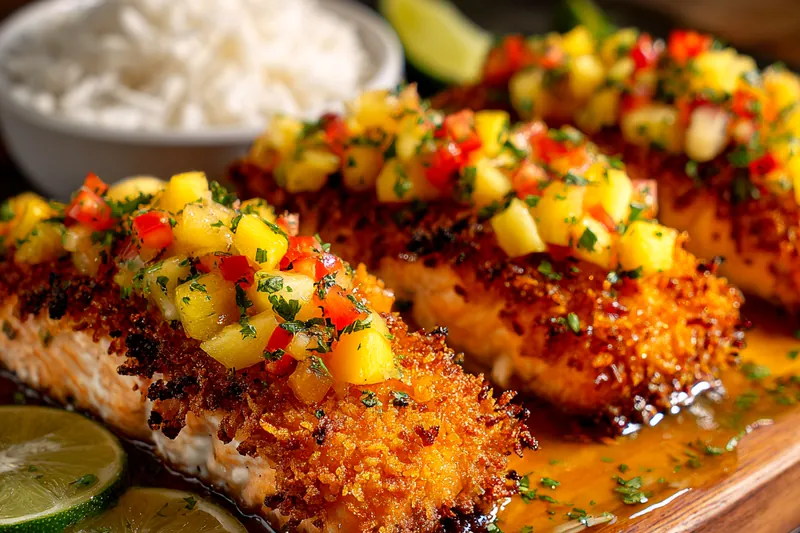
Essential Ingredients for Coconut Crusted Salmon Delight
Key ingredients for this recipe include fresh salmon, unsweetened shredded coconut, and panko breadcrumbs. The salmon serves as the perfect protein base, while the coconut and panko create a crispy coating that enhances the dish's texture. Each ingredient plays a crucial role in making this recipe a standout.
Using high-quality, fresh ingredients is essential for achieving the best flavor. Opt for wild-caught salmon when possible, as it tends to have a richer taste. Additionally, fresh coconut or high-quality shredded coconut will elevate the final dish.
Essential Ingredient Notes
- Salmon: Choose fresh salmon fillets for the best texture and flavor. Look for fillets that are bright in color and smell ocean-fresh. Skinless fillets tend to work best for this recipe.
- Shredded Coconut: Use unsweetened shredded coconut for a more authentic taste. Sweetened coconut can alter the flavor profile of the dish. Toasting the coconut before use can add an extra layer of flavor.
- Panko Breadcrumbs: Panko breadcrumbs provide a light and crispy texture that regular breadcrumbs cannot replicate. Ensure they are fresh for the best results, and consider mixing in herbs or spices for additional flavor.
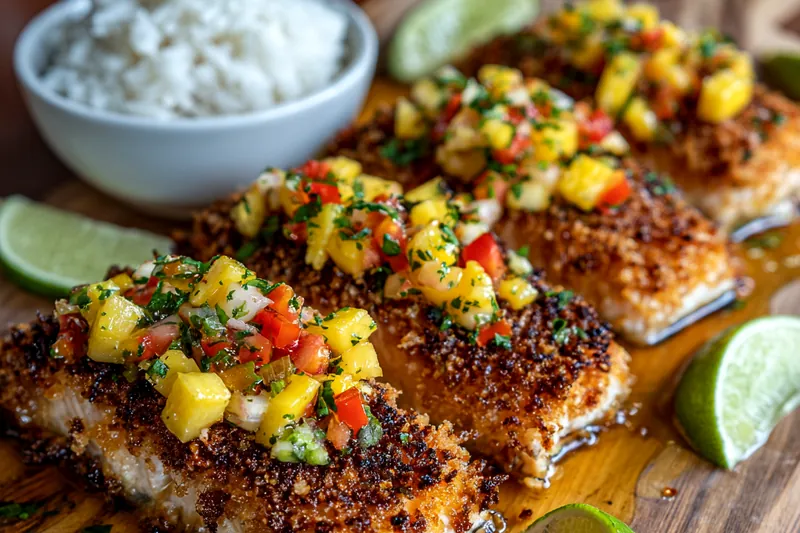
Step-by-Step Cooking Process
The cooking process for Coconut Crusted Salmon Delight is straightforward and rewarding. Start by preparing your oven and ingredients, then move on to the coating process. Each step is designed to ensure that the salmon remains moist while achieving a crispy exterior.
To achieve perfect results, focus on the breading technique and maintain the correct cooking temperature. This will not only enhance flavor but also ensure the ideal texture for the dish.
Key Technique for Perfect Coconut Crusted Salmon Delight
The key technique in this recipe is the three-step breading process, which involves flour, egg, and the coconut-panko mixture. This layering ensures that the crust adheres properly and creates a crunchy texture when baked. Additionally, ensuring the salmon is at room temperature before cooking helps it cook evenly.
Coconut Crusted Salmon Delight
📋 Ingredients
Main Ingredients
- 1 cup butterRoom temperature
- 2 tablespoons lime juiceFreshly squeezed
- 1 tablespoon honeyOptional
- 1 teaspoon garlic powderFor flavor
For the Sauce
- 2 lbs salmon filletSkin removed
- 1 cup shredded coconutUnsweetened
- 1 cup panko breadcrumbsFor crunch
- 2 large eggsBeaten
- 1/2 cup all-purpose flourFor dredging
- 1 teaspoon garlic powderFor flavor
- 1 teaspoon onion powderFor flavor
- 1 teaspoon saltFor seasoning
Instructions
Prepare the Oven
Preheat your oven to 400°F (200°C) and line a baking sheet with parchment paper.
Mix Dry Ingredients
In a shallow dish, combine shredded coconut, panko breadcrumbs, garlic powder, onion powder, salt, black pepper, cayenne pepper, and lime zest.
Prepare Breading Stations
Set up three bowls: one with flour, one with beaten eggs, and one with the coconut-panko mixture.
Coat the Salmon
Dredge each salmon fillet first in flour, then dip in the beaten eggs, and finally coat with the coconut-panko mixture.
Place on Baking Sheet
Arrange the coated salmon fillets on the prepared baking sheet. Drizzle with olive oil.
Bake
Bake in the preheated oven for 20-25 minutes, or until the salmon is cooked through and the coating is golden brown.
Serve
Garnish with fresh cilantro and lime wedges before serving.
Recipe Notes & Tips
Storage Tips
Store leftovers in an airtight container in the refrigerator for up to 3 days. For longer storage, consider freezing the uncooked, coated salmon. Thaw overnight in the refrigerator before cooking.
Serving Suggestions
Serve Coconut Crusted Salmon Delight with a fresh green salad, coconut rice, or sautéed vegetables. For a refreshing twist, add a mango salsa on the side.
Recipe Variations
Feel free to experiment with different spices in the coconut coating or try using other types of fish, such as tilapia or cod, for a variation on the classic recipe.