Creamy Lobster Pasta
Creamy Lobster Pasta is a delightful dish that brings the taste of the sea right to your table. This Italian-inspired recipe combines succulent lobster with a rich, creamy sauce for a luxurious dining experience. Perfect for special occasions or a cozy night in, this dish is sure to impress. Enjoy the flavors of Italy with every bite.


Why This Creamy Lobster Pasta Recipe Works
This Creamy Lobster Pasta recipe stands out due to its simple yet elegant flavors. The combination of fresh lobster and a creamy sauce creates a luxurious dish that feels indulgent. The garlic and white wine add depth, while the lemon juice brightens every bite, making it irresistible.
The technique used in this recipe ensures that the pasta absorbs the flavors of the sauce, making each mouthful a delight. Sautéing the garlic before adding liquids enriches the overall taste, and the balance of ingredients keeps the dish from feeling heavy.
💡 Professional Tip
For the best results, use fresh lobster meat and high-quality ingredients. When cooking the sauce, keep it at a gentle simmer to avoid curdling the cream. Additionally, reserve some pasta water to adjust the sauce consistency if needed.
Frequently Asked Questions
Yes, you can prepare the sauce ahead of time and store it in the refrigerator. Just reheat gently on the stovetop before adding cooked pasta and lobster. It’s best to cook the pasta fresh to maintain its texture.
If lobster is unavailable, you can use shrimp or crab meat as a substitute. Both options will add a delicious seafood flavor to the dish. Adjust cooking times as necessary, as shrimp cooks more quickly than lobster.
The dish is done when the pasta is al dente and the sauce is heated through, with the lobster just warmed. Be careful not to overcook the lobster, as it can become tough and chewy.
It is not recommended to freeze Creamy Lobster Pasta, as the cream can separate and change texture upon thawing. However, you can freeze the sauce separately and reheat it when you're ready to serve.
Serve this dish with a crisp green salad and garlic bread for a complete meal. A chilled glass of white wine pairs beautifully, enhancing the flavors of the lobster.
Creamy Lobster Pasta can be stored in the refrigerator for up to 2-3 days. Ensure it is kept in an airtight container to maintain freshness. Reheat gently to avoid overcooking the lobster.
Yes, the sauce can be made ahead of time and refrigerated. Just cook the pasta fresh and combine everything right before serving to ensure optimal flavor and texture.
Reheat Creamy Lobster Pasta on the stovetop over low heat, adding a splash of cream or reserved pasta water to keep the sauce smooth. Stir gently to avoid overcooking the lobster.
Recipe Troubleshooting Guide
Too Dry
Problem: If your pasta dish turns out too dry, it can be unappetizing.
Solution: Add a little reserved pasta water or extra cream to the sauce to loosen it up. Stir well and heat gently to combine.
Not Crispy Enough
Problem: Sometimes, the lobster may not have the desired crispy texture.
Solution: For a crispier texture, you can broil the lobster briefly after cooking. Just place it under the broiler for a minute or two before serving.
Overcooked
Problem: If the lobster is overcooked, it can become tough.
Prevention: To prevent overcooking, monitor the cooking time closely, especially when adding the lobster to the sauce. It should only be heated through and not cooked again.
Undercooked Center
Problem: If the pasta is undercooked, it can be chewy and unpleasant.
Recovery: Return the pasta to boiling water for another minute or two, checking frequently until it reaches al dente texture.
Burnt Exterior
Problem: The sauce may burn if not watched closely.
Prevention: Cook the sauce over medium-low heat and stir frequently to prevent it from sticking and burning.
Flavor Balance
Too Sweet: If the sauce is too sweet, add a squeeze of lemon juice to brighten and balance the flavors.
Too Salty: If it’s too salty, adding a little cream can help mellow the flavors.
Bland: If the dish is bland, boost the flavor with more garlic, herbs, or a pinch of red pepper flakes.
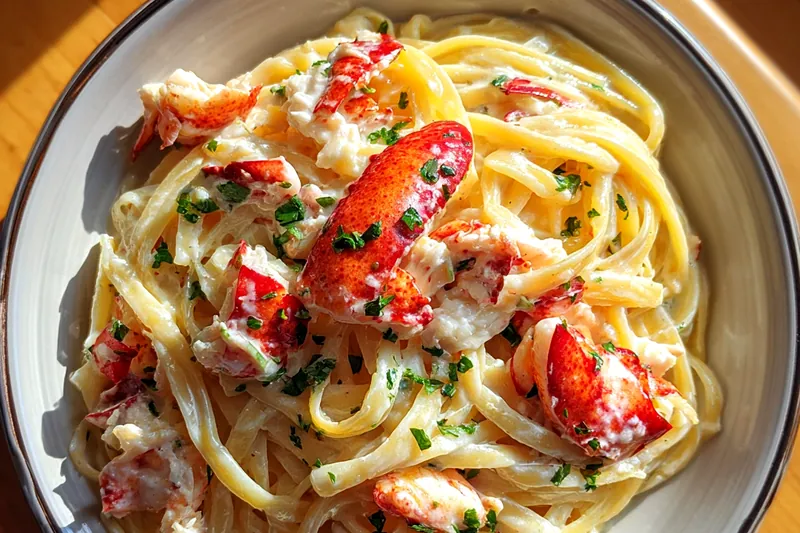
Essential Ingredients for Creamy Lobster Pasta
The key ingredients for this recipe include fresh lobster, heavy cream, and high-quality pasta. Using fresh lobster elevates the dish, providing a sweet and succulent flavor. The heavy cream creates a rich base that coats the pasta beautifully.
Opt for high-quality ingredients to ensure the best results. Fresh, locally-sourced seafood and artisanal pasta can make a significant difference in flavor and texture, enhancing your overall dining experience.
Essential Ingredient Notes
- Lobster Meat: Always choose fresh, sweet lobster meat for the best flavor. If using frozen lobster, ensure it is completely thawed and well-drained before cooking to avoid excess moisture.
- Heavy Cream: Using high-fat heavy cream will yield a richer sauce. Avoid low-fat alternatives as they may not provide the same creamy texture and flavor.
- Pasta: Linguine or fettuccine are traditional choices for creamy sauces. Ensure the pasta is cooked al dente, as it will continue to cook slightly when mixed with the hot sauce.
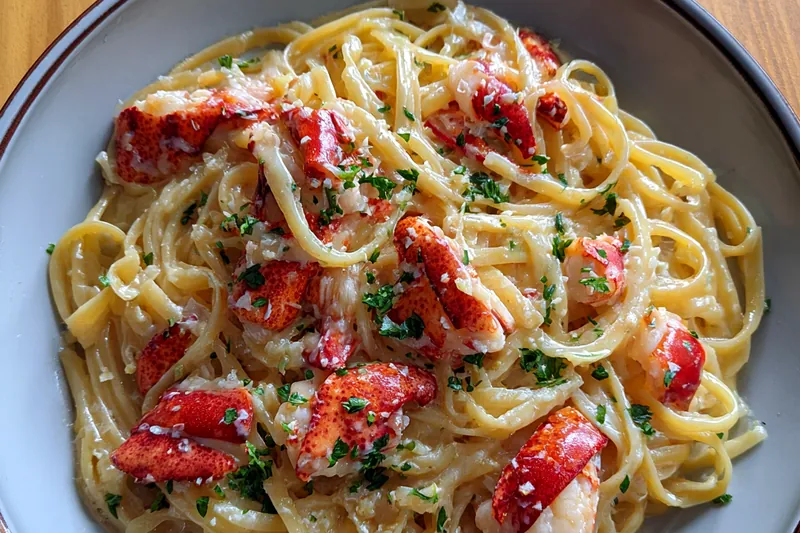
Step-by-Step Cooking Process
This Creamy Lobster Pasta is easy to prepare, making it perfect for both weeknight dinners and special occasions. The process involves cooking the pasta, sautéing garlic, and simmering the sauce to perfection. Each step is designed to build flavor and ensure a rich, creamy consistency.
Achieving the perfect results depends on timing and temperature control. Pay attention to the lobster cooking time to prevent overcooking, and adjust the sauce consistency with pasta water if needed. Follow these steps closely for a dish that will impress everyone at the table.
Key Technique for Perfect Creamy Lobster Pasta
The most important technique for this dish is ensuring the sauce is simmered gently to avoid curdling. Adding the lobster at the end and heating it just until warm preserves its delicate texture and flavor. This careful process results in a creamy, luscious sauce that perfectly complements the pasta.
Creamy Lobster Pasta
📋 Ingredients
Main Ingredients
- 1 cup butterRoom temperature
- 1 cup heavy creamFor a rich sauce
- 1 cup grated Parmesan cheeseFinely grated
- ¼ cup fresh parsleyChopped for garnish
- 1 lemonJuiced for brightness
For the Sauce
- 1 lb lobster meatCooked and chopped
- 12 oz linguineOr fettuccine
- 4 cloves garlicMinced
- 1 tablespoon olive oilFor sautéing
- 1 teaspoon red pepper flakesFor a bit of heat
- Salt and pepperTo taste
- ¾ cup white wineFor depth of flavor
- 1 cup cherry tomatoesHalved
Instructions
Cook the Pasta
In a large pot of salted boiling water, cook the linguine or fettuccine according to package instructions until al dente. Drain and set aside.
Sauté Garlic
In a large skillet over medium heat, heat olive oil and melt butter. Add minced garlic and red pepper flakes, sauté for 1-2 minutes until fragrant.
Add Wine
Pour in the white wine and simmer for 3-4 minutes until slightly reduced.
Make the Sauce
Stir in the heavy cream and bring to a gentle simmer. Add Parmesan cheese, stirring until melted and smooth.
Combine Lobster
Add the chopped lobster meat and cherry tomatoes to the sauce, cooking for another 3-5 minutes, until heated through.
Mix Pasta
Toss the cooked pasta in the sauce, adding lemon juice, salt, and pepper to taste. Ensure the pasta is well coated.
Garnish
Serve immediately, garnished with fresh parsley and additional Parmesan cheese if desired.
Enjoy
Pair with a glass of white wine and enjoy your creamy lobster pasta!
Recipe Notes & Tips
Storage Tips
Store any leftovers in an airtight container in the refrigerator. The dish is best consumed within 2-3 days for optimal freshness. To reheat, use the stovetop with a splash of cream or pasta water to maintain the sauce's consistency.
Serving Suggestions
Serve Creamy Lobster Pasta alongside a crisp green salad and garlic bread for a complete meal. Consider pairing it with a light, chilled white wine to complement the richness of the dish.
Recipe Variations
Feel free to customize this recipe by adding vegetables such as spinach or asparagus. You can also experiment with different types of pasta or add a hint of lemon zest for an extra layer of flavor.